More Than a Concrete Slab: The Science Behind a High-Performance Warehouse Foundation
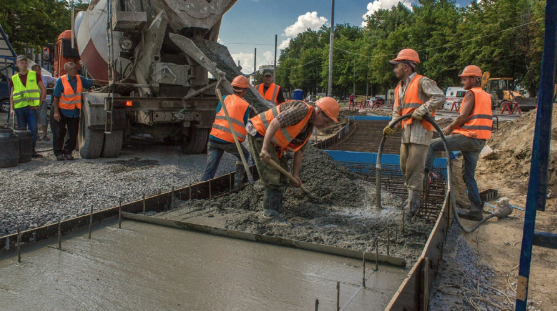
To the casual observer, a warehouse floor might seem like just a vast expanse of concrete. But for business owners, logistics managers, and experienced general contractors, that slab is a critical, engineered component that directly impacts a facility's efficiency and longevity.
A properly constructed foundation is the unseen backbone of any commercial or industrial building, especially a warehouse. A foundation that doesn't meet specifications, however, can lead to costly operational disruptions, accelerated wear on equipment, and long-term maintenance issues.
At S-Bar Construction, we understand that a warehouse slab isn't simply "poured"—it's a precision-engineered system. Here’s a look at the essential elements and expert execution we bring to building foundations that perform.
The Unseen Support: What Happens Below the Slab
The integrity of any concrete slab is fundamentally tied to the ground it rests upon. Our approach begins long before any concrete arrives on site:
Understanding the Soil: We work closely with geotechnical engineers to obtain and interpret detailed soil reports. This provides crucial information about the soil's composition, its capacity to bear structural loads, and its moisture characteristics.
Sub-grade Preparation: This is a foundational step where precision is paramount. Our teams oversee the meticulous preparation and uniform compaction of the sub-grade, ensuring a stable and consistent base. Any inconsistencies here can compromise the long-term performance of the slab.
Vapor Barrier Installation: We ensure the correct installation of a high-quality vapor barrier to prevent moisture migration from the ground up into the concrete slab. This is vital for protecting the concrete itself and any moisture-sensitive goods or equipment stored within the facility.
Engineering the Mix: Concrete Designed for Purpose
The specific properties of the concrete itself are tailored to the demands of the building. A warehouse floor supporting heavy racking and constant forklift traffic requires a different mix than other commercial slabs.
As your general contractor, we manage the precise specification of the concrete, collaborating with structural engineers and our trusted suppliers to ensure the mix incorporates the right balance of:
Strength (PSI): Optimized to handle the projected loads, whether static (racking) or dynamic (vehicle traffic).
Aggregates: Careful selection of the sand and gravel size and type for desired durability and finish.
Admixtures: Utilizing specialized additives that can enhance workability, control curing times, or improve resistance to wear and abrasion.
Reinforcement: Implementing the specified reinforcement, whether conventional rebar or modern fiber reinforcement, to manage shrinkage cracking and enhance structural integrity.
Achieving Precision: Flatness and Levelness Standards
For modern warehouses, particularly those utilizing automated systems or high-lift forklifts in narrow aisles, specific standards for floor flatness and levelness are critical.
These are measured as FF (Floor Flatness) and FL (Floor Levelness):
FF (Flatness): Quantifies the degree of surface regularity or "bumpiness."
FL (Levelness): Measures how closely the slab conforms to a true horizontal plane.
Achieving high FF/FL numbers for these specialized applications requires experienced concrete contractors who utilize advanced placement techniques and finishing equipment, such as laser screeds. At S-Bar Construction, we oversee the execution of these demanding specifications to ensure the foundation meets the operational requirements of our clients.
Managing Concrete Movement: Joints and Curing
Concrete naturally undergoes shrinkage as it cures. If not properly managed, this can lead to undesirable cracking and "curling" (where slab edges lift). A high-performance slab design accounts for this inherent characteristic.
Strategic Joint Placement: We work from engineered plans to ensure control joints are precisely located. These joints are essentially planned weakened areas that encourage shrinkage to occur in a controlled, predictable manner, preventing random cracking.
Proper Curing Procedures: The curing process is as vital as the pour itself. We oversee the critical curing phase, employing methods such as specialized curing compounds or protective blankets, to ensure the concrete attains its full design strength and durability.
Your Partner for a High-Performance Foundation
A commercial or industrial foundation is a complex, engineered system that serves as the backbone of your entire operation. Its successful performance relies on a deep understanding of soil mechanics, material science, and expert craftsmanship, precisely executed.
At S-Bar Construction, we bring our proven experience in managing these critical construction processes. We ensure your facility is built on a foundation designed for long-term performance, supporting your business for decades.
Ready to start your next project on a solid footing?
Contact S-Bar Construction today.
Follow us on Linkedin to see our work in action, featuring highlights from our recent projects.