Raise the Roof. Not the Budget: Why “Raising the Roof” is the Smartest ROI in Modern Industrial Construction
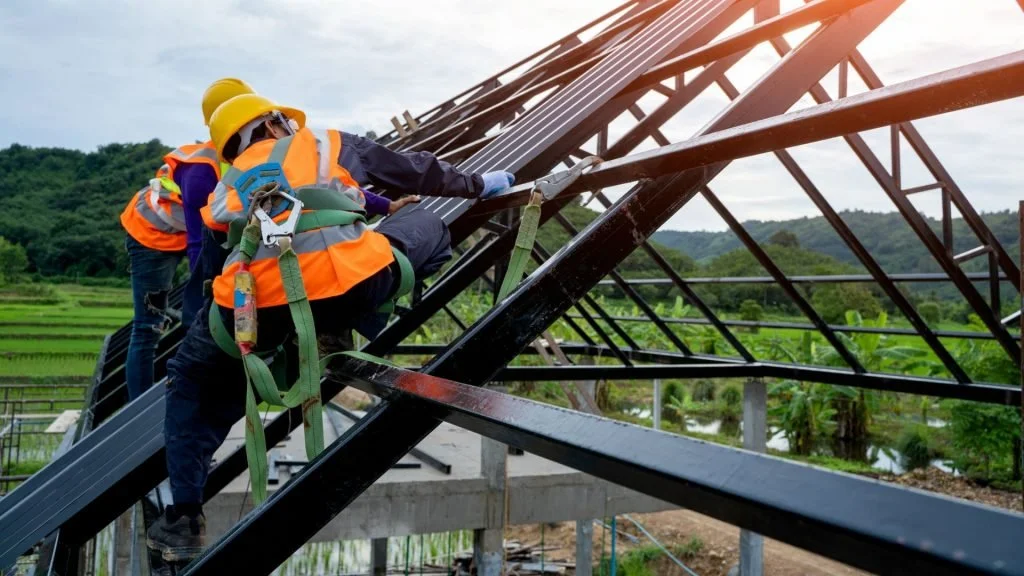
The Clear Height Gap Is Costing You Tenants
In the industrial real estate market of 2026, the ceiling isn't just a structural element—it's the difference between a fully leased asset and a vacancy problem. Modern e-commerce and automated logistics operations demand clear heights of 36 to 40 feet. If your building tops out at 20 to 24, you're not in the running.
Here's the hard truth we tell every client upfront: modern tenants don't shop for square footage—they shop for cubic volume. Automated racking systems and high-velocity sorting machines need vertical clearance that older buildings simply weren't designed to provide.
The traditional answer was to scrape the site, demolish and rebuild from scratch. With today's material costs and permitting timelines, that's often an 18- to 24-month process that eats your capital. We built a better way.
How We Execute a Roof Lift
A structural roof lift is a precision engineering operation. Here's what happens on site:
1. Structural Assessment: Before a single hydraulic jack is positioned, a structural team analyzes your existing footings, slab, and joist system. We tell you honestly whether your building is a candidate—and what it is a reasonable budget. No surprises in the field.
2. Precision Synchronized Lifting: It is critical to deploy synchronized hydraulic systems that lift the existing roof as a single intact piece. This is non-negotiable: uneven lifting causes warping, and warped steel means your tenant's automated racking won't function. Every inch of lift is controlled and measured.
3. Column Extension: Steel crews execute structural column extensions with laser-verified plumb tolerance. If the columns aren't perfectly vertical, the automated systems your tenants paid millions for won't operate. We hold the line on precision.
4. MEP Re-Engineering: Before the lift, the MEP team disconnects all utilities cleanly. After the roof is secured at its new height, extended runs are reinstalled and fire suppression systems will be upgraded based on ratings for the new cubic volume. The building comes back better than it went up.
The Details That Keep You On Budget
Managing the Weather Window
An open roof on an active industrial site is a liability. Dividing every project into zones and only opening what crews can fully seal and dry-in within a single shift. Continuously reviewing hyper-local weather data around the clock, to ensure that your tenant's inventory stays protected—full stop.
Structural Load Engineering
Modern roofs carry more than rain loads. Spec-ing steel decking gauged for high-density loads and installing high-R-value insulation to eliminate potential thermal bridging. Thus, when a client adds a solar array or heavy-duty HVAC later, the structure is already rated for it.
Early-Stage Procurement
Roofing materials are volatile. By locking in pricing during pre-construction and managing on-site storage logistics, should the market spike mid-project—as it often does—your price doesn't move. That's a discipline most contractors skip.
Lift vs. Rebuild: The Honest Comparison
A demolish-and-rebuild means 18 to 24 months minimum, full new construction permitting costs, and your existing slab and steel scrapped entirely. It's the maximum capital outlay for the maximum timeline—with the highest carbon footprint to show for it.
A roof lift requires just a fraction of the timeline, remodel-category permitting in most jurisdictions, your original structure preserved and upgraded, and a significantly lower embodied carbon footprint—a direct selling point to ESG-conscious institutional tenants.
Is Your Building a Candidate?
The answer starts with a structural evaluation. We'll tell you whether a lift, a repair, or a rebuild is the right financial move—and we'll show you the numbers behind the recommendation.
We don't just build walls. We solve the structural puzzles that keep your portfolio profitable.
Contact S-Bar Construction today to schedule your evaluation.
Frequently Asked Questions (FAQ)
1. When does a roof need full replacement versus repair?
If more than 25% of the roof area shows moisture infiltration, or if the structural decking beneath the membrane has started to corrode, replace it. If the issues are localized and the insulation is dry, a targeted repair or silicone restoration buys you another decade at a fraction of the cost. We give you an honest read—not the more expensive answer.
2. Can my existing roof handle solar panels or upgraded HVAC?
It depends on the original dead load design, and most legacy warehouses were built lean. Before any array or heavy HVAC goes on the roof, we run a structural dead load analysis. If reinforcement is needed, we can upgrade the joists and girders without touching the entire frame. Know before you commit capital.
3. What is a cool roof and do I need one?
Cool roofs use highly reflective membranes—typically white or light grey—that stay up to 50–60°F cooler than traditional dark surfaces. Many jurisdictions now mandate them under energy codes. We recommend them on every project regardless: they reduce tenant energy costs by up to 15% in warm climates and are a direct ESG selling point to institutional tenants.
4. How does S-Bar keep a project on schedule when weather hits?
We don't leave it to chance. Every project is divided into zones and we only open what our crews can seal and dry-in within a 24-hour window. We run hyper-local weather tracking and maintain a ready-to-seal protocol on site at all times. Rain delays that cripple other contractors don't stop our projects.
5. Is a structural roof lift actually safe?
When it's engineered and managed correctly, yes. Using synchronized hydraulic systems that lift the entire roof structure simultaneously—no uneven loads, no twisting, no warping. MEP is disconnected and re-engineered cleanly before and after. The fire suppression system gets upgraded to ESFR during reinstallation. The building ends up structurally superior to what you started with.