What Institutional IOS Operators Are Actually Spending Their CapEx On
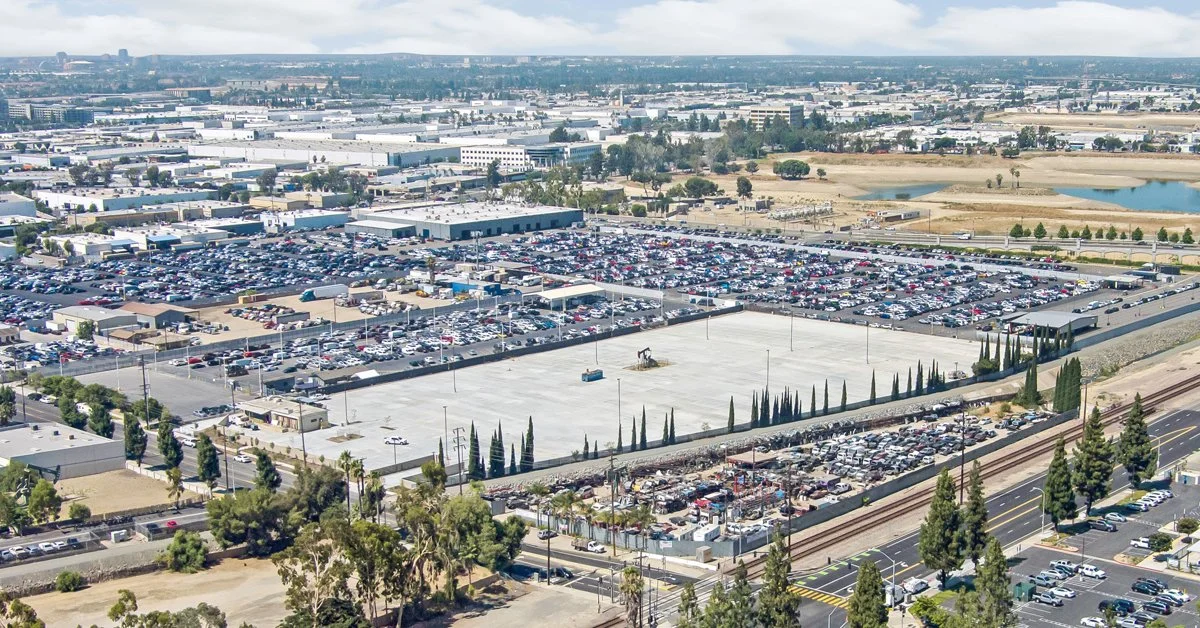
Blackstone. Brookfield. J.P. Morgan. Barings. The capital pouring into industrial outdoor storage in 2026 all has the same problem on the other end: sites that need to be brought up to institutional standard before they perform.
The Acquisition Wave Everyone Is Talking About
The IOS asset class has attracted more institutional capital in the last 18 months than in the prior decade combined. Alterra raised $189 million to acquire 49 IOS sites. Jadian secured $231 million for 43 properties. Barings formed a $150 million joint venture with Brennan Investment Group. Brookfield paid $1.2 billion to take Peakstone Realty Trust private, adding 60 IOS yards to its portfolio. Industrial Outdoor Ventures recapitalized and now targets $100 to $200 million in acquisitions per year.
Approximately 35 to 45 percent of IOS acquisitions are now driven by institutional capital, and transaction volume reached an estimated $14 to $16 billion in 2025 — a 15 to 20 percent increase over 2024.
The capital markets coverage of this story focuses almost entirely on the acquisition side. What it leaves out is what happens immediately after the deal closes: every one of these organizations has the same problem. They acquired sites that need to be improved before they can perform at the yields and rents that justified the investment thesis.
That's where the real construction story begins.
What "Class A IOS" Actually Requires
Vacancy for fully improved, paved, and secured IOS sites in top metros often falls below 4 percent — significantly tighter than the 6 to 8 percent vacancy seen across less improved sites. The market is telling institutional operators something direct: improved sites lease faster, retain tenants longer, and command meaningfully higher rents.Common strategies across leading IOS operators include upgrading yard surfaces, enhancing security, and offering flexible lease terms — reflecting a shift from basic land ownership toward value-driven asset management.Here's what that shift looks like on the ground, site by site:
Full paving. Logistics and trucking tenants with modern equipment increasingly require paved, stable surfaces — gravel yards limit the tenant pool and the lease rate ceiling. The Class A IOS benchmark is a fully paved site. For operators who acquired gravel or dirt sites, full paving is typically the first and largest CapEx item. In Texas, that means asphalt across the primary yard with concrete in high-load zones — container stacking areas, crane pads, and primary circulation lanes where thermal softening under sustained point loads is a real performance risk.
Drainage and stormwater infrastructure. Every paved surface creates stormwater runoff that requires engineered management. Stormwater drainage plans are typically required to prevent runoff pollution, and developers should budget for features like detention ponds or oil-water separators on paved yards to comply with water quality rules. For IOS operators bringing sites up to institutional standard across multiple states, stormwater compliance is the regulatory requirement most commonly discovered late — and the most expensive to retrofit after paving is already complete.
Perimeter security and access control. Institutional tenants storing high-value equipment, vehicles, and construction materials in the open require a security infrastructure that functions as a system — not just a fence with a padlock. That means engineered perimeter fencing rated for the site's use class, automated gate systems that can handle the access volumes of active tenants, camera coverage across the full yard, and lighting designed for 24-hour operations. Some IOS sites are now integrating solar-powered LED lighting systems that activate via motion, reducing energy costs while maintaining security coverage around the clock.
Minor structures. Most IOS sites include some built components — guard shacks, small offices, canopy covers, or maintenance buildings. These structures are easy to overlook in an acquisition model focused on land value, but they directly affect tenant experience and site functionality. A guard shack that leaks or an office without functioning HVAC becomes a tenant complaint within the first summer.
The CapEx Execution Problem
Institutional IOS platforms are acquiring sites faster than they are executing improvements. The constraint isn't capital — it's contractors who understand the IOS asset class, can work across multiple states under a consistent standard, and can sequence site improvements around active tenant operations.Most local contractors can pave a yard. Far fewer understand that an IOS site being improved while a tenant is actively staging trailers and equipment requires the same operational sequencing discipline as renovating an occupied warehouse. Work zones need to be coordinated around tenant access routes. Drainage improvements need to happen without trapping active equipment on the wrong side of a construction zone. Paving phases need to account for which areas the tenant needs operational during each stage.IOS rents are projected to grow 6 to 8 percent in 2026, continuing a three-year CAGR of roughly 8 to 9 percent. Every month a site sits unimproved or partially improved is a month of below-market rent — or no rent at all. The speed and quality of CapEx execution directly determines when an acquired site hits its return target.
Where S-Bar Fits
S-Bar Construction builds and improves IOS sites for institutional operators across Texas and multiple states. Our scope covers full paving programs — gravel-to-asphalt conversions, concrete high-load zones, phased surface upgrades — alongside drainage design and stormwater compliance, perimeter security infrastructure, lighting systems, and minor structure construction and maintenance.We understand the IOS asset class because we work in it. We understand active-site sequencing because we've executed construction around operating tenants across dozens of projects. And for portfolio operators with sites across multiple markets, we deliver the same standard in every location — one contractor, consistent execution, no quality variation by market.If you're an IOS operator with a pipeline of sites that need to be brought up to institutional standard, that's exactly the conversation we're built for.
Contact S-Bar Construction to discuss your site improvement program. www.sbarconstruction.com